
Hawthorne Warrant Database
Hawthorne warrant records are kept by the Hawthorne Police Department and Los Angeles County Superior Court. This South Bay city has a population of about 88,000, though it approaches the 100,000 threshold with recent growth. Warrant checks are done in person at the police station with valid ID. The city runs its own police force and maintains records at 4440 West 126th Street. Court cases go through LA County Superior Court, which serves all LA County cities. Warrants stay on file with both the police and the court until resolved.
Hawthorne Quick Facts
Hawthorne Police Department Records
The Hawthorne Police Department is at 4440 West 126th Street. You can call the main number at 310-349-2700. Warrant checks must be done in person with valid photo ID. The department does not share warrant info over the phone for privacy and security reasons. If you want to know if you have a warrant, you need to visit the police station with your ID.
Hawthorne Police works with the Los Angeles County Sheriff and the Superior Court to process warrants. If a judge issues a bench warrant, the police receive a copy and enter it into the system. They also obtain arrest warrants from magistrates when they have probable cause that a crime was committed. All warrants are entered into a statewide database that any California law enforcement officer can access during traffic stops or other encounters.
| Agency | Hawthorne Police Department |
|---|---|
| Address | 4440 West 126th Street, Hawthorne, CA 90250 |
| Phone | 310-349-2700 |
If you go to the police station to check on a warrant, bring current photo ID and be ready to explain why you are checking. For minor misdemeanor warrants, you may be cited and released with a court date. For serious warrants, you may be arrested and taken to Los Angeles County jail. Be aware that turning yourself in can show the judge you are taking responsibility, which may help your case.
Los Angeles County Superior Court
Hawthorne cases are heard in the Los Angeles County Superior Court. The county has dozens of courthouse locations. Hawthorne cases often go to the Torrance Courthouse or the Inglewood Courthouse, depending on the type of case. Los Angeles County has an electronic search warrant portal that law enforcement uses, but public warrant searches are not available online. You need to check with the police or go to the courthouse in person.
The Los Angeles County Sheriff Records and Identification Bureau maintains warrant info for the county. Their office is at 12440 East Imperial Highway in Norwalk. You can call them at (562) 345-4441. According to the Sheriff FAQ, if you want to find out if you have a warrant, you should go to your local police department or Sheriff's station. They can conduct a search to see if you have a warrant.
To clear a bench warrant through the court, you can post bail if the warrant has a bail amount set. You can also appear at the courthouse for a warrant surrender. The Torrance Courthouse is close to Hawthorne and serves many South Bay cases. Check in at the Criminal Division clerk's office and say you are there to clear a bench warrant. You will be put on the calendar to see a judge. The judge may release you on your own recognizance or require bail. Bring ID and any documents related to your case.
Los Angeles County is large and busy, so court procedures can take time. Arrive early in the morning if you plan to turn yourself in at court. The clerk's office can tell you when warrant calendars are held. Some courthouses have specific days and times for warrant surrenders.
Types of Warrants in Hawthorne
Warrants in Hawthorne fall into several types. Arrest warrants are issued when police present evidence to a judge and the judge finds probable cause. Bench warrants are issued when someone does not show up for court or violates a court order. Traffic warrants happen when people ignore traffic tickets. All warrant types give police the authority to arrest you.
- Arrest warrants for felonies and misdemeanors based on criminal complaints
- Bench warrants for failure to appear or failure to comply with court orders
- Traffic warrants from unpaid or unresolved traffic citations
- Probation violation warrants when terms of probation are not met
- Contempt of court warrants for willfully disobeying a judge's order
California law governs warrant procedures. Penal Code sections 813 through 829 cover arrest warrants and describe what must be shown before a warrant is signed. Penal Code 978.5 deals with bench warrants and sets the conditions for when a court can issue one. These laws apply throughout California.
Traffic warrants are common in Hawthorne and Los Angeles County. If you get a traffic ticket and do not pay or appear in court, the judge can issue a bench warrant. Vehicle Code 40508 makes it a misdemeanor to willfully fail to appear on a traffic citation. Most traffic warrants have bail set, so you can pay the bail to clear the warrant and get a new court date.
Note: Warrants remain active until you resolve them through the court. They do not expire on their own.
California Criminal Records Access
The California Department of Justice maintains criminal history records for all arrests and convictions in the state. While the DOJ does not offer public warrant searches, you can request a copy of your own criminal record. This is useful if you need to check your background for employment or licensing. The DOJ website explains how to request your criminal history record by submitting fingerprints and a processing fee.
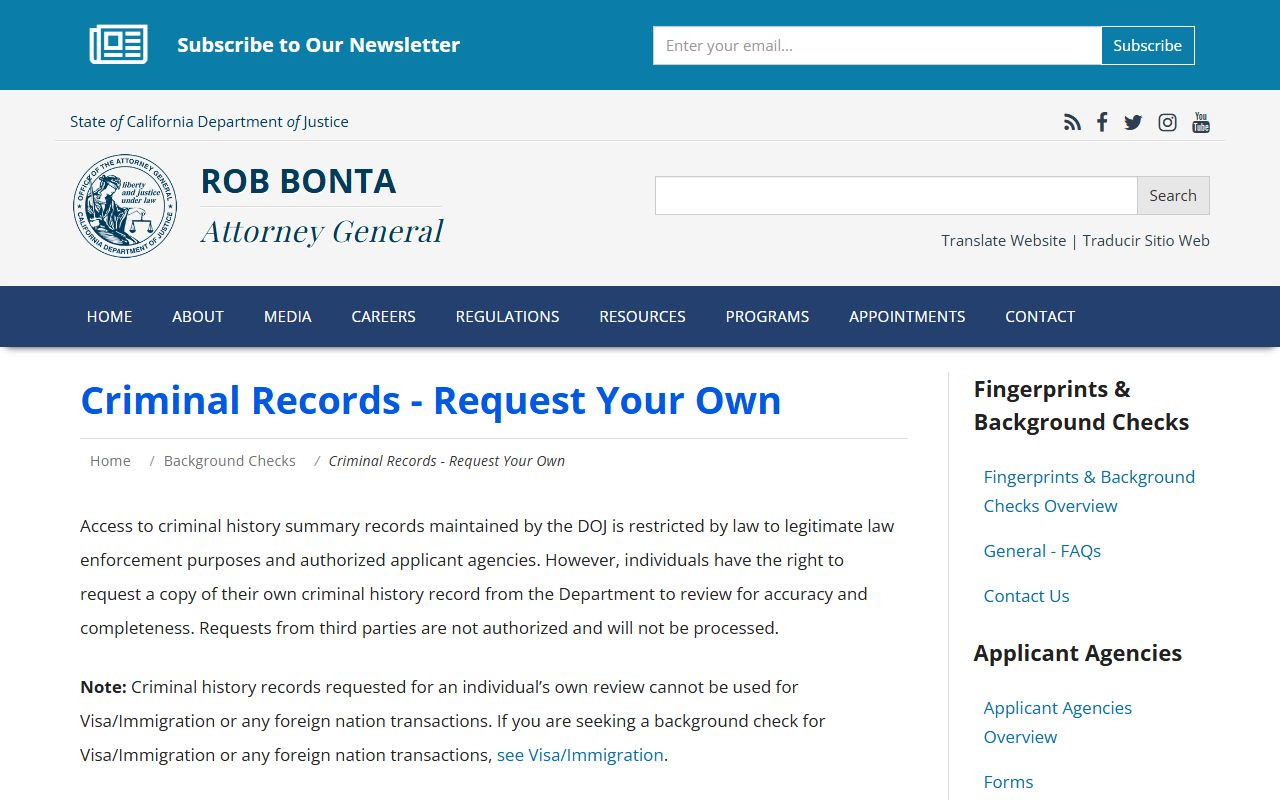
This page from the DOJ website shows the process to get a copy of your criminal record. You must pay a fee of $25 and submit fingerprints through Live Scan or by mail. The record shows arrests, charges, and court outcomes. It does not always list active warrants, so you still need to check with local police or the court for warrant status. Processing can take several weeks for certified copies.
How to Clear a Warrant in Hawthorne
If you discover you have a warrant in Hawthorne, you should take steps to clear it. Warrants do not expire or go away. You can turn yourself in at the police station, appear at the courthouse, post bail if allowed, or hire a lawyer to file a motion to recall the warrant. The best approach depends on the type of warrant and the charges.
Turning yourself in at Hawthorne Police is one option. Bring valid photo ID and go during business hours. Tell the desk officer you have a warrant and want to clear it. The officer will verify the warrant and decide what happens next. For minor warrants, you may be cited and released with a court date. For more serious warrants, you may be arrested and taken to LA County jail.
Surrendering at the courthouse is often easier. Go to the Torrance or Inglewood Courthouse early in the morning. Check in at the Criminal Division clerk's office and say you are there to clear a bench warrant. The court will put you on the calendar to see a judge. The judge may release you on your own recognizance or require bail. Bring ID and any documents related to your case.
Legal Resources and Assistance
People facing warrant issues may need legal help. The Los Angeles County Public Defender represents people who cannot afford a lawyer in criminal cases. Private attorneys also handle warrant matters. Legal aid organizations in LA County offer free or low-cost help for qualifying individuals.
The California Courts Self-Help website has guides on handling bench warrants. Visit California Courts Self-Help for information. The LA County court website also has forms and instructions for resolving warrants. If you need a certified copy of your criminal record, you can request it from the California Department of Justice.
Nearby Cities with 100,000+ Population
Hawthorne is in Los Angeles County near other large cities. Each city has its own police department or contracts with the county Sheriff. If you have a warrant from a different city, contact that city's law enforcement agency.
- Torrance - South of Hawthorne, served by Torrance Police Department
- Inglewood - North, served by Inglewood Police Department
- Long Beach - Southeast, served by Long Beach Police Department