
Find San Francisco Warrants
San Francisco warrant records are managed by the San Francisco County Sheriff and the San Francisco Superior Court. San Francisco is unique because it is both a city and a county. This means the city government and county government are the same entity. With a population around 875,000 people, San Francisco handles a high volume of criminal cases and warrants. The Sheriff runs the jail system and serves warrants. To check if you have a warrant, you must visit the Criminal Records Window at 850 Bryant Street, Room 460. They are open Monday through Friday from 8 am to 5 pm. Bring a valid photo ID and request a warrant check for yourself. Be aware that if you have an active warrant for a non citable offense, you may be arrested.
San Francisco Quick Facts
Check Warrants at the Criminal Records Window
The Criminal Records Window is at 850 Bryant St, Room 460 on the 4th Floor in San Francisco. This is part of the San Francisco County Sheriff Office. Hours are Monday through Friday from 8 am to 5 pm. The office is closed on weekends and county holidays. If you want to check for a warrant on yourself, go in person with a valid photo ID. They will search their system and tell you if there is an active warrant.
The Sheriff website warns that if you have an active warrant for a non citable offense, you may be arrested on the spot. A non citable offense is one where you cannot just pay a fine and go. This includes most misdemeanors and all felonies. If your warrant is for a traffic ticket or a very minor offense, they may let you post bail or give you a court date. But if it is for something more serious, they may book you into jail. Know what you are dealing with before you go in. Call the Criminal Records Window at 415-553-9505 to ask questions before you visit.
For written requests or FOIA requests, email sfsd.foia@sfgov.org. They handle public records requests for arrest records, booking records, and other Sheriff documents. Warrant checks must be done in person. They do not give out warrant information over the phone or by email for safety reasons.
Note: Do not go to the Criminal Records Window if you have a serious warrant unless you are ready to be arrested. Talk to a lawyer first if you are not sure.
San Francisco Police Department
San Francisco Police Department has a main station at 1245 3rd Street, 1st Floor. Call them at 415-575-7232 for general questions. For written records requests, email sfpd.cisu@sfgov.org. The police handle arrests and investigations. When they arrest someone, the case goes to the District Attorney and then to Superior Court. If a judge issues a warrant, it goes into the Sheriff system. SFPD can serve warrants but they do not maintain warrant files. That is done by the Sheriff.
If you were arrested by SFPD, you can request a copy of the arrest report. Police reports are free in San Francisco. This is different from many other cities that charge fees. You submit a request through their records unit. It may take a few days to get the report. Warrant status is separate from arrest records. For warrant checks, go to the Sheriff Criminal Records Window, not to the police department.
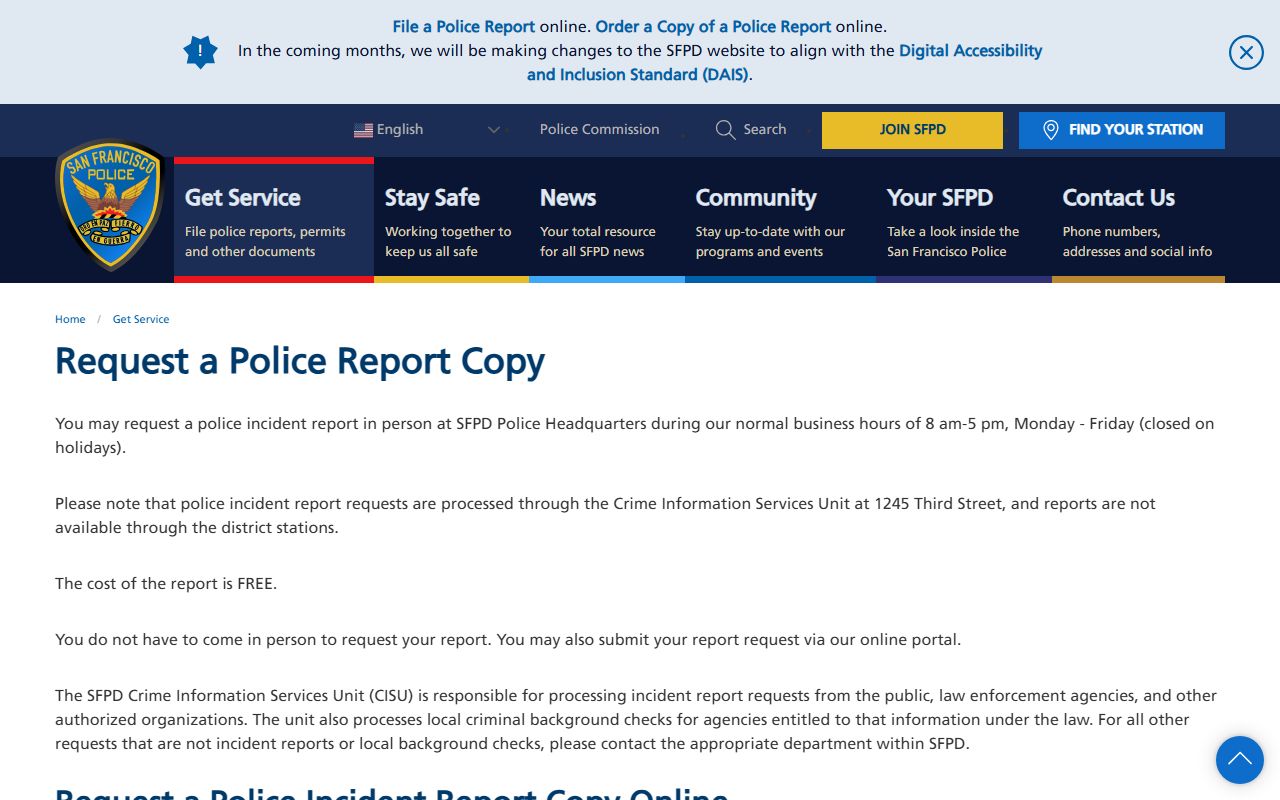
The SFPD records page explains how to get copies of police incident reports and other documents related to arrests in San Francisco.
Appearing in Court on a Warrant
San Francisco Superior Court is at 850 Bryant Street, the same building as the Sheriff office. If you have a bench warrant for failing to appear, you need to go to the courthouse. Get there early in the morning. Some courts have a clear warrant calendar at 8:30 am or 9 am. Check in at the criminal clerk window. Tell them you are there to surrender on a warrant. They will verify your ID and put you on the calendar. You wait in the courtroom until your name is called.
When the judge calls you, explain why you missed court. Be honest and respectful. If you did not get notice or if you forgot, say that. The judge may recall the warrant and set a new court date. Or the judge may raise your bail or add conditions. It depends on the case and how many times you have missed court. If this is your first failure to appear, the judge is usually more lenient. If you have a history of not showing up, expect consequences.
California Penal Code section 978.5 gives judges the power to issue bench warrants when you fail to appear. The warrant stays active until you deal with it. There is no time limit. A warrant from years ago is still valid. You cannot wait it out. You have to go to court and clear it. Ignoring a warrant does not make it go away.
For traffic warrants, you may be able to pay the fine and clear the warrant without a court appearance. Call the traffic division and ask. California Vehicle Code section 40508 makes it a misdemeanor to fail to appear on a traffic ticket. The court can suspend your driver license until you clear the warrant. Once you pay or appear, the court sends notice to DMV. Your license is reinstated after DMV processes the notice. This can take a few days.
Legal Help in San Francisco
If you cannot afford a lawyer, you may qualify for a public defender. The San Francisco Public Defender Office represents people who meet financial guidelines. When you appear in court, ask for a public defender application. Fill it out completely. The court reviews your income and assets. If you qualify, a public defender is assigned to your case at no cost. Public defenders handle felonies and serious misdemeanors. They do not take traffic cases or very minor offenses.
Legal aid organizations in San Francisco include Bay Area Legal Aid and the Lawyers Committee for Civil Rights. These groups focus on civil issues like housing, employment, and family law. They do not handle criminal cases. For criminal matters, you need a public defender or a private attorney. If you do not qualify for a public defender, look for a private criminal defense lawyer. Many offer free consultations. Explain your warrant and they will tell you what your options are. Ask about fees upfront. Some lawyers charge a flat fee for warrant recalls. Others bill hourly. Get the agreement in writing.
The State Bar of California runs a referral service. Search for attorneys by location and practice area. When you contact a lawyer, ask if they can recall the warrant without you being present. Some warrants can be handled by filing a motion. Others require you to appear no matter what. The lawyer can review your case and tell you which type you have.
Nearby Counties and Cities
San Francisco is a consolidated city and county. It does not have other cities within it. But it is surrounded by other counties. If you are not sure where a warrant is from, check these nearby counties.
San Mateo County is just to the south. Their Superior Court has an active warrants page with details on how to appear. The court is in Redwood City. If you live on the border between San Francisco and San Mateo County, make sure you know which county issued the warrant.
Alameda County is to the east across the bay. Their Sheriff is in San Leandro and their main criminal court is in Oakland. Alameda County uses a system called Odyssey Portal for case searches. If you have a warrant in Alameda County, it will not show up in San Francisco records. You have to check with that county.
Marin County is to the north across the Golden Gate Bridge. Marin County has an online warrant search tool at apps.marincounty.gov. You can search for Marin County warrants by name. San Francisco warrants do not appear there. Each county is separate.
If you live in the Bay Area and are not sure which county has your warrant, check with each county individually. There is no unified system across counties. You have to contact each one.