
San Luis Obispo County Warrant Records
San Luis Obispo County maintains warrant records through the Superior Court and Sheriff's Office. The county has clear options for those with active warrants, including court surrender, bail posting, and law enforcement contact. The Superior Court created a comprehensive warrant self-help page at slo.courts.ca.gov that explains each choice. This system makes it easy to find out about warrants and take action. Whether you need to post bail or schedule a court date, San Luis Obispo County gives you tools to resolve warrant issues. The county serves over 280,000 residents and handles all warrant types from traffic failures to felony arrest warrants.
San Luis Obispo County Quick Facts
Superior Court Warrant Information
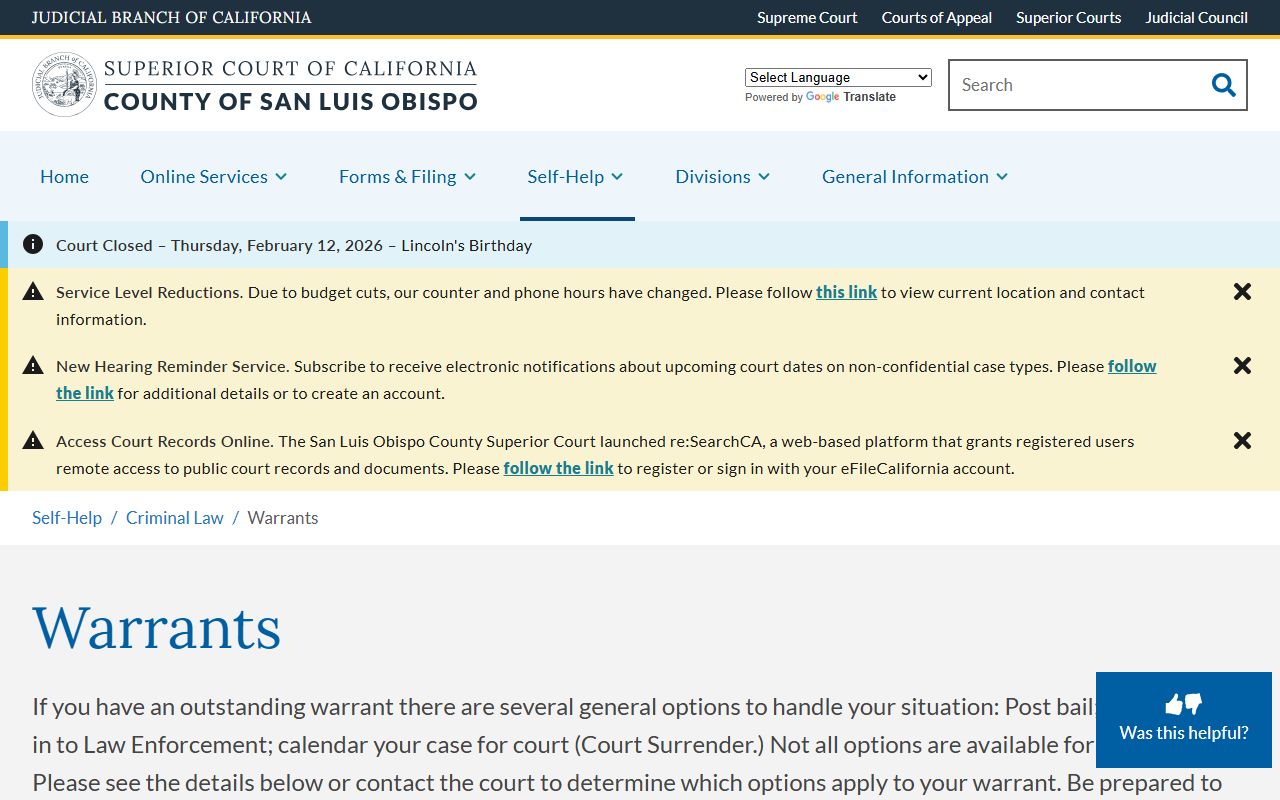
The San Luis Obispo County Superior Court provides three main ways to handle an active warrant. You can post bail to clear the warrant if bail is set. You can turn yourself in to law enforcement. Or you can do a court surrender where you calendar your case and appear in court. Each option has different steps and outcomes. The court explains all this on their warrant self-help page.
If your warrant has a bail amount, you can post it at the court. The court accepts cash, credit card, money order, cashier's check, or personal check. But if your warrant says "NO BAIL" then this won't work. Some serious warrants don't allow bail. You must check what your specific warrant says before trying to post bail in San Luis Obispo County.
Court surrender is a common choice. This means you call the court and ask to be put on the calendar. Then you show up on that date. The court will address your warrant and set a new court date for your underlying case. This works for most misdemeanor warrants. Call the Criminal Division at (805) 706-3600 and choose Option 3 to ask about court surrender. You can also email them at slocrim@slo.courts.ca.gov.
The Superior Court has three locations in San Luis Obispo County:
- San Luis Obispo courthouse at 1035 Palm Street
- Paso Robles courthouse at 1050 Monterey Street
- Grover Beach courthouse at 214 South 16th Street
Court hours are Monday through Friday from 8:30 AM to 4:00 PM. The clerk's office closes from noon to 1:00 PM each day. Get there early if you need same-day help. San Luis Obispo County courts handle warrant issues at all three locations.
Online Case Search
San Luis Obispo County was the first in California to use the re:SearchCA platform for case lookups. This system lets you search criminal cases and check basic case status. While it won't always show if you have a warrant, it can show your case info and court dates. The system is free to use.
You search by name or case number. The results show the case type, filing date, and next court date. Documents may be available depending on the case. This tool helps if you know you had a case but don't remember the case number. Access it through the court website at slo.courts.ca.gov.
Note: The online case system won't confirm if you have a warrant. Call the court directly for warrant checks. Staff can look up your name and tell you if a warrant exists. This is the most reliable way to check warrant status in San Luis Obispo County.
Sheriff's Office Records
The San Luis Obispo County Sheriff maintains arrest records and serves warrants. If you turn yourself in on a warrant, you may do so at the Sheriff's Office. Bring valid ID with you. Be aware that for some warrants, you may be arrested and booked. This depends on the warrant type and bail amount.
The Sheriff's Office is located at 1585 Kansas Avenue in San Luis Obispo. The main phone number is (805) 781-4550. For records requests, call during business hours Monday through Friday. The office maintains booking logs and arrest records for San Luis Obispo County.
Law enforcement can also serve warrants at your home or workplace. If you know you have a warrant in San Luis Obispo County, it's better to handle it yourself than wait for deputies to come find you. Your cooperation gets noted in the records.
Types of Warrants
San Luis Obispo County issues several types of warrants. Each one has a different purpose and process.
Bench warrants get issued when you fail to appear in court. This is the most common warrant type in San Luis Obispo County. If you miss a court date for any reason, the judge can issue a bench warrant. California Penal Code Section 978.5 covers bench warrant procedures. These warrants usually allow bail, and you can clear them through court surrender.
Arrest warrants come from criminal investigations. A judge signs the warrant based on probable cause that you committed a crime. These warrants authorize law enforcement to arrest you. Arrest warrants may have higher bail amounts. Some have no bail at all. The process to clear these warrants depends on the charges.
Traffic warrants are a subset of bench warrants. They happen when you fail to appear on a traffic ticket or fail to pay a fine. Vehicle Code Section 40508 makes it a misdemeanor to willfully fail to appear on a traffic citation in California. San Luis Obispo County issues many traffic warrants each year.
Search warrants are different. These authorize police to search property for evidence. The public doesn't usually deal with search warrants directly. They're part of investigations. San Luis Obispo County judges issue search warrants to law enforcement based on affidavits.
Costs and Fees
Clearing a warrant in San Luis Obispo County can involve several costs. Bail is the biggest one. Bail amounts vary widely. A traffic warrant might have $100 bail. A felony warrant could be $50,000 or more. Some warrants say "no bail" which means you can't pay to get out.
Court fees also apply. If you appear on a warrant, the court may charge a warrant fee. This can be around $150 or more. The fee gets added to your case costs. Some judges will waive it if you show good cause. Ask about fee waivers if you can't afford to pay in San Luis Obispo County.
If you need copies of court records, the clerk charges $0.50 per page. Certified copies cost $40.00 plus the per-page fee. Research time over 10 minutes costs $15.00. These are standard Superior Court fees across California. They apply in San Luis Obispo County too.
Legal Help
If you have a warrant in San Luis Obispo County, consider talking to a lawyer. A lawyer can explain your options and may be able to appear for you. Some warrants can be recalled without you having to come to court. This is called a Penal Code 166 motion to quash and recall the warrant.
The Legal Services Corporation provides free help to low-income residents. In San Luis Obispo County, contact Legal Services of Northern California at (800) 348-3011. They may be able to advise you or refer you to other resources. The court self-help center also has forms and info.
The State Bar of California runs a lawyer referral service. Call 1-866-442-2529 to get connected with local attorneys who handle criminal cases. Many attorneys offer free consultations. Even a short call can help you understand your warrant situation in San Luis Obispo County.
Cities in San Luis Obispo County
San Luis Obispo County has no cities over 100,000 population. The largest city is San Luis Obispo with about 47,000 residents. Other cities include Paso Robles, Atascadero, Pismo Beach, Morro Bay, and Arroyo Grande. All these cities fall under the jurisdiction of the San Luis Obispo County Superior Court for warrant matters.
If you live in any city in San Luis Obispo County and have a warrant, contact the Superior Court criminal division. The location where you appear depends on where your case was filed. Most cases file in San Luis Obispo, but Paso Robles and Grover Beach also handle cases from their regions.
Nearby Counties
San Luis Obispo County borders several other California counties. Each has its own court system and warrant procedures.
- Monterey County to the north
- Kern County to the east
- Santa Barbara County to the south
Warrants don't cross county lines automatically, but California has a statewide warrant system. If you have a warrant in San Luis Obispo County, other agencies can see it if they run your name. This means you could get arrested in another county on a San Luis Obispo warrant.